Promoting Climate Resilient Rural Infrastructure in Northern Vietnam

Project Description

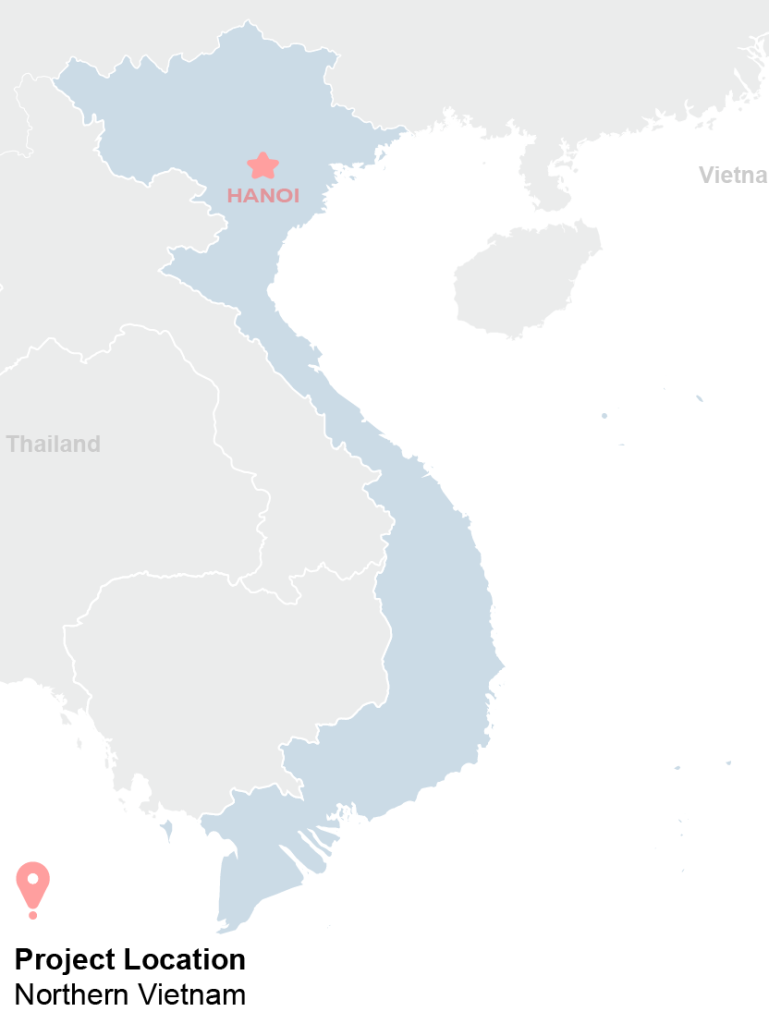
Northern Vietnam is highly vulnerable to increasingly intense storms and floods, particularly in rural areas where infrastructure is often unprepared for climate extremes. The ADB-funded project Promoting Climate Resilient Rural Infrastructure in Northern Vietnam introduces non-conventional, nature-based engineering techniques to reduce the vulnerability of rural infrastructure. With a focus on bioengineering—using native vegetation for slope stabilization and riverbank protection—the project demonstrates sustainable, low-cost alternatives to traditional concrete methods. Two pilot demonstration sites were established in Bac Kan and Son La provinces, alongside conventional infrastructure projects, to showcase how bioengineering can mitigate erosion and flood impacts while providing additional community benefits.

Objectives, Activities and Results

The project aims to build climate resilience by identifying and testing practical, community-maintainable solutions for rural roads, irrigation, and flood protection. ICEM’s contributions include the technical design and supervision of bioengineering installations such as vetiver grass lines and brush layering techniques. These interventions are cost-effective, environmentally friendly, and offer livelihood co-benefits. The project trains local contractors, communities, and government officials in bioengineering, develops integration strategies for broader adoption through training curricula and standards, and produces climate risk assessments to guide future infrastructure planning. The results demonstrate the viability of climate-resilient infrastructure that is accessible, sustainable, and rooted in local knowledge and materials.

client:
AusAID
LOCATION:
Vietnam
TIME:

TAGS

Project description
Vietnam
Completed Project

Publications

The following reports and materials were produced as part of the project

  • TR-12: The Bioengineering Workshop: Design and Construction (Roads) was the third of a series of training events for national technical staff on the theme of climate change adaptation, with a focus on bioengineering as a response measure to increase the resilience of rural road infrastructure. (English)
  • TR-14: Demonstration Effectiveness Audit: The report describes the project monitoring approach and presents the results of biophysical and social monitoring of the demonstration sites (English/Vietnamese);
  • TR-15: Training Completion: The report describes training activities conducted and training materials produced during the project (English/Vietnamese);
  • TR-16: Construction Completion: This report describes in detail the four demonstration sites (English/Vietnamese);
  • TR-17: Bioengineering – Field Guidelines for Slope Protection: The report provides guidance on the selection of appropriate bioengineering and associated engineering options for the surface protection of roadside slopes and riverbanks, and to increase their resilience to extreme climatic events (English/Vietnamese);
  • TR-18: Slope Protection Designs and Specifications: This document provides the detailed technical designs of selected bioengineering and associated engineering options used to protect and increase the resilience of roadside slopes and riverbanks against surface erosion and shallow failure (English/Vietnamese);
  • TR-19: Training Course Content: The aim of this report is to facilitate the transfer of knowledge regards climate-resilient planning and measures to a range of stakeholders, and to maximise the uptake by government, engineers and universities (English/Vietnamese);
  • TR-20: Final Workshop: This report presents the programme, discussions, outputs and presentations made at the final workshop of the project (English/Vietnamese); Final Report: This report records the project’s principal activities and achievements since inception and provides an opportunity to reflect on the achievements of the TA and lessons learned through the implementation of TA activities (English/Vietnamese);
  • Poster: Bioengineering to protect riverbanks (English); and
  • Poster: Bioengineering to protect roads. (Vietnamese)
In addition to the reports, ICEM has produced the publications Natural solutions to erosion control in Viet Nam: Case studies from the Northern mountainous region (Vietnamese), and Natural Solutions to Erosion Control in Viet Nam – Lessons and Going Forward. The first documents work carried out at the four demonstration sites, with the aim to communicate key project activities and results to a broader audience outside of technical experts. The second defines lessons from the project that will be helpful going forward. Whilst some are unique to Viet Nam, most of the lessons learned from constructing the bioengineering demonstration sites in the mountainous region of northern Viet Nam apply to all low-cost slope protection projects anywhere in the world.

Presentation

National solutions to erosion control in Viet Nam: Case studies from the Northern mountainous region

Video

Bringing Nature Back based on this project

RECENT PROJECTS