Project Description
Rapid urbanization in the Greater Mekong Subregion (GMS) is unfolding at a pace far exceeding that of many OECD countries, particularly in small and medium-sized cities along key growth corridors. However, this development is increasingly threatened by climate change impacts, including rising sea levels, intensified flooding, droughts, and tropical storms. These risks disproportionately affect vulnerable communities in fragile environments and compromise critical infrastructure and livelihoods across sectors such as agriculture, manufacturing, and services. Despite some national-level adaptation efforts, specific urban agendas addressing climate resilience remain underdeveloped in the region.
Objectives, Activities and Results
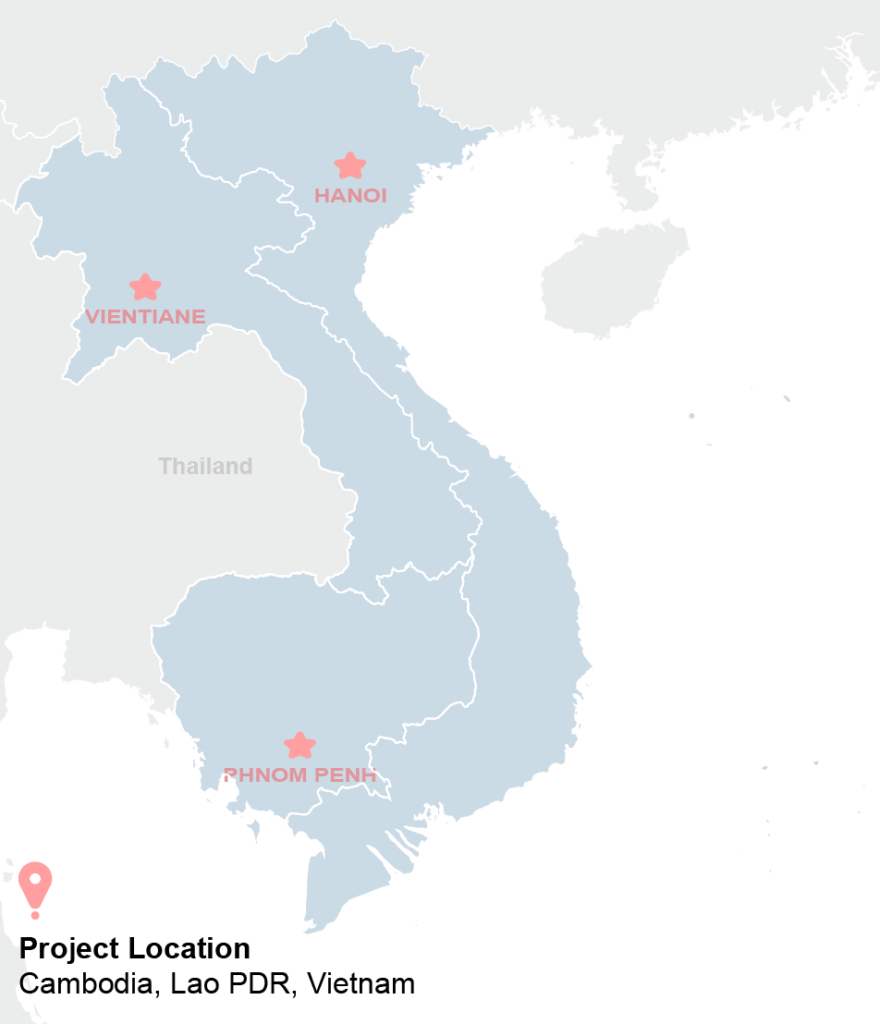
This ADB-supported project aims to promote climate-resilient urban development in GMS cities by improving understanding and capacity to address climate risks. ICEM is conducting climate threat and vulnerability assessments in three towns—Battambang (Cambodia), Dong Ha (Vietnam), and Kaysone Phomvihane (Lao PDR)—with a focus on critical infrastructure. The project includes stakeholder engagement, knowledge-sharing events, and policy dialogues to support local governments in developing context-specific adaptation plans. A key output will be a handbook synthesizing lessons learned and good adaptation practices from the region and internationally, serving as a guidance tool for scaling urban climate resilience strategies throughout the GMS.
This project won an Asia wide Urban Resilience prize from USAID and UNDP.