In the Mekong Delta, some of the most valuable evidence on climate change is held by the people who farm it. From 1 to 7 November 2026, an ICEM expert team travelled to Vĩnh Long and Cà Mau provinces on the second field mission for the climate vulnerability and risk assessment that ICEM is leading under VN-ADAPT, a programme that helps farmers and agribusinesses adopt nature-based solutions to adapt to a changing climate.
Vĩnh Long and Cà Mau are two of the six provinces where VN-ADAPT works across the Mekong Delta and Central Highlands, and both sit on the front line of climate change. Each year from December to April, as rainfall falls away, salinity rises sharply in coastal communes and shapes when farmers can plant rice and stock shrimp. The assessment will show where these pressures are greatest across all six provinces, and where working with nature offers farmers the most practical way to adapt.
Working alongside provincial agencies
In each province, the mission opened with a joint session with the Department of Agriculture and Environment. The team then split into thematic groups that worked in parallel with counterpart divisions, from crop production and plant protection, aquaculture and agricultural extension to land management, water resources, irrigation and disaster prevention, and forest protection. Working this way allowed each expert to review data with the specialists who hold it and to identify gaps on the spot.
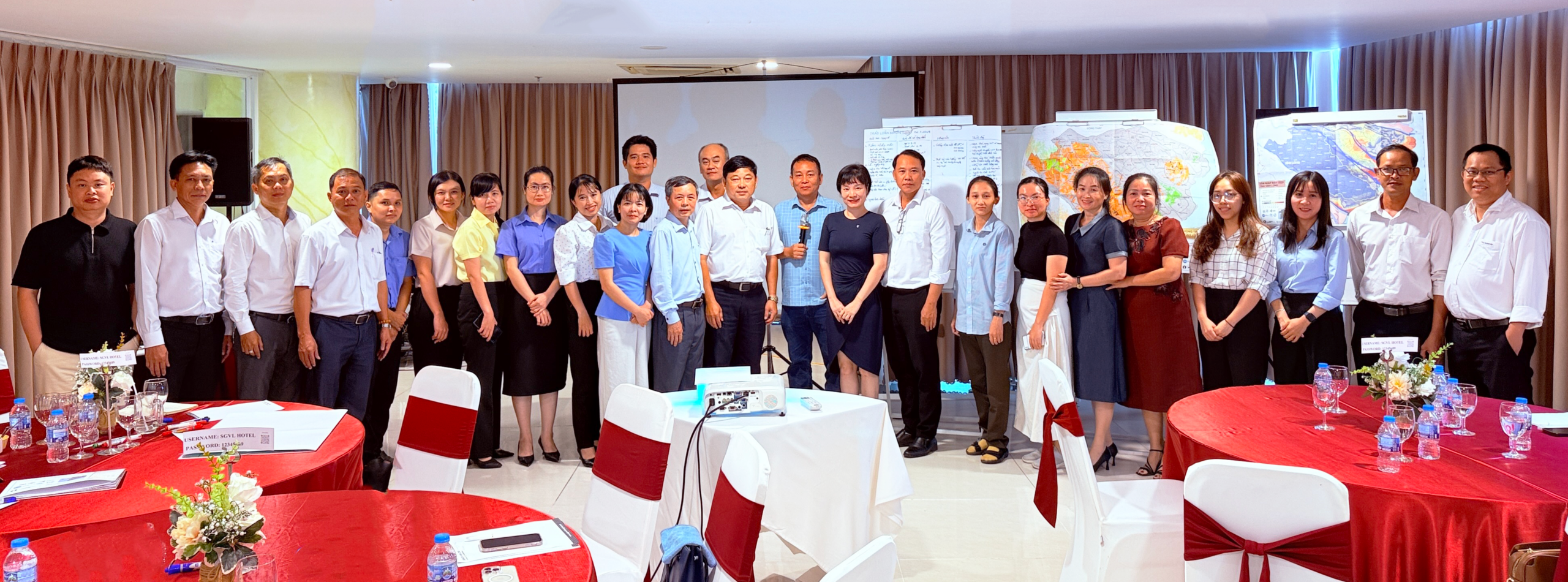
A half-day workshop in each province then widened the circle to the Committee for Ethnic and Religious Affairs, the Women’s Union, the Farmers’ Union and the Cooperative Alliance. Working in three groups on rice, shrimp and biodiversity, participants shared what they have observed of climate trends and what their sectors need in order to adapt. The workshops also introduced the assessment method, which follows both the programme framework and Circular 01/2022 of the Ministry of Agriculture and Environment, so that provincial staff can apply the same structured approach in their own planning.
In the communes
The team visited Long Vĩnh and Long Hòa communes in Vĩnh Long, and Đầm Dơi and Khánh Bình communes in Cà Mau. In each commune, ICEM and SNV gender equality and social inclusion specialists led four focus groups covering socioeconomic conditions, the natural environment, rice and shrimp production, and natural habitats, bringing together male and female farmers, the Women’s Union, the Farmers’ Union and local cooperatives.
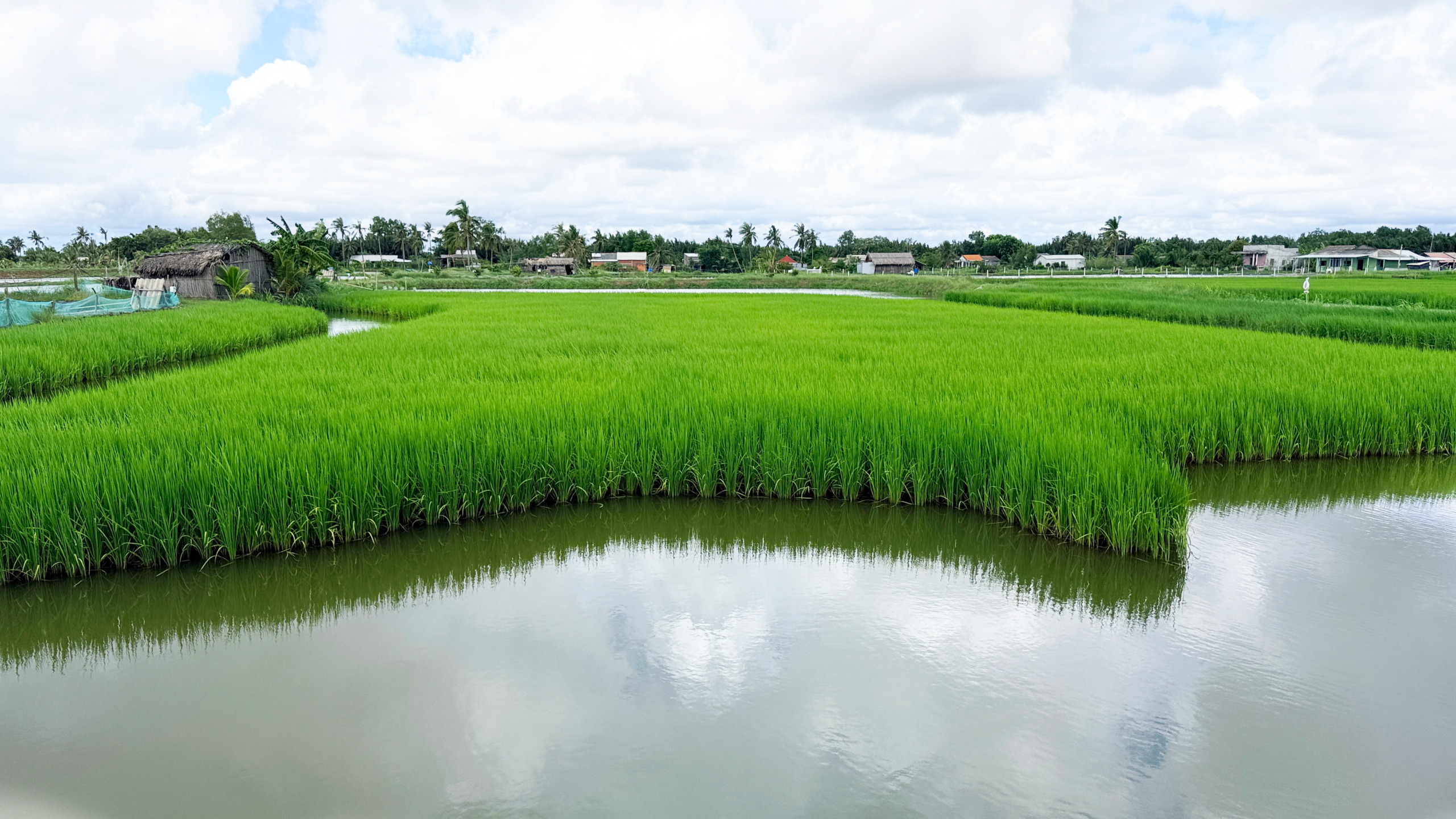
The team also visited adaptation models already in operation: integrated shrimp–rice systems, improved extensive shrimp farming and mangrove–shrimp farming. Each works with the delta’s natural processes rather than against them. In shrimp–rice rotation, a rice crop is followed by a shrimp cycle as water shifts between fresh and brackish, while mangroves kept within shrimp farms protect pond banks and provide habitat and natural food for the shrimp.
Across all three models, the constraint farmers raised most often was access to affordable credit. Banks’ requirements for collateral and standardisation criteria put preferential loans out of reach for many households, limiting what they can invest in improved practices and how quickly they can recover from a poor season.
Evidence grounded in experience
Farmers keep no formal records of how salinity has changed over the years, but many read the water closely. Elsewhere in the delta, in Vân Khánh commune, An Giang, farmers have bought portable salinity meters from local shops to test their water and decide for themselves when to plant and when to stock. VN-ADAPT builds on that local knowledge, combining it with GIS, remote sensing, climate modelling and salinity modelling from the Southern Institute of Water Resources Planning, so that the assessment is both technically rigorous and true to conditions on the ground.
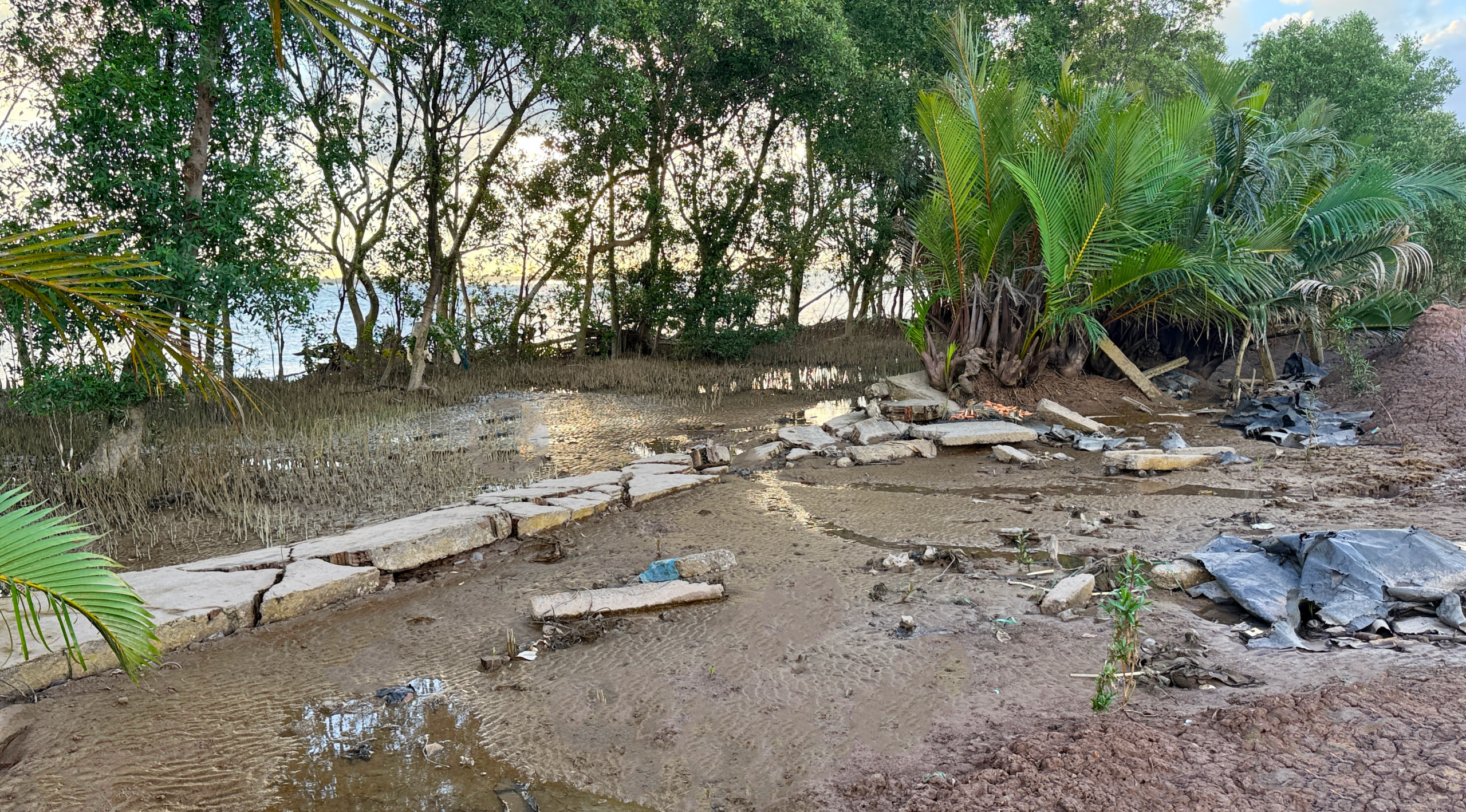
That evidence has a practical purpose. VN-ADAPT works with private companies to bring nature-based solutions into the rice, shrimp and coffee supply chains that farmers depend on. The assessment will show which production areas face the highest climate risk, so that companies can see where investing in nature-based adaptation, such as new production models or practices, will do the most good, and where risks are high enough that production itself may need to change. It will also guide the design of nature-based and ecosystem-based approaches for the highest-risk areas. For farmers who struggle to borrow, investment channelled through the supply chains they already sell into offers another route to change. In the delta, bringing nature back into farming systems is also a way of keeping them productive.
The mission would not have been possible without the generous cooperation of provincial agencies, commune authorities, local institutions, cooperatives and farming communities in Vĩnh Long and Cà Mau, whose time, openness and expertise were invaluable.
VN-ADAPT (Viet Nam Nature-based Solutions for Adaptation in Agriculture through Private Sector Transformation) is led by SNV in consortium with ICEM, IUCN and UNEP, with the Ministry of Agriculture and Environment as government project owner. ICEM leads the programme’s climate vulnerability and risk assessment. This project is supported by the International Climate Initiative (IKI) of the Federal Government of Germany. Within the Federal Government, the IKI is anchored in the Federal Ministry for the Environment, Climate Action, Nature Conservation and Nuclear Safety (BMUKN). Selected individual projects are also the responsibility of the Federal Foreign Office (AA).
This reflects the team’s answer that production may need to change or be avoided where risk is too high. Worth checking that SNV and the provinces are comfortable seeing this said publicly; the alternative is to end the sentence at “will do the most good”.