Project Context
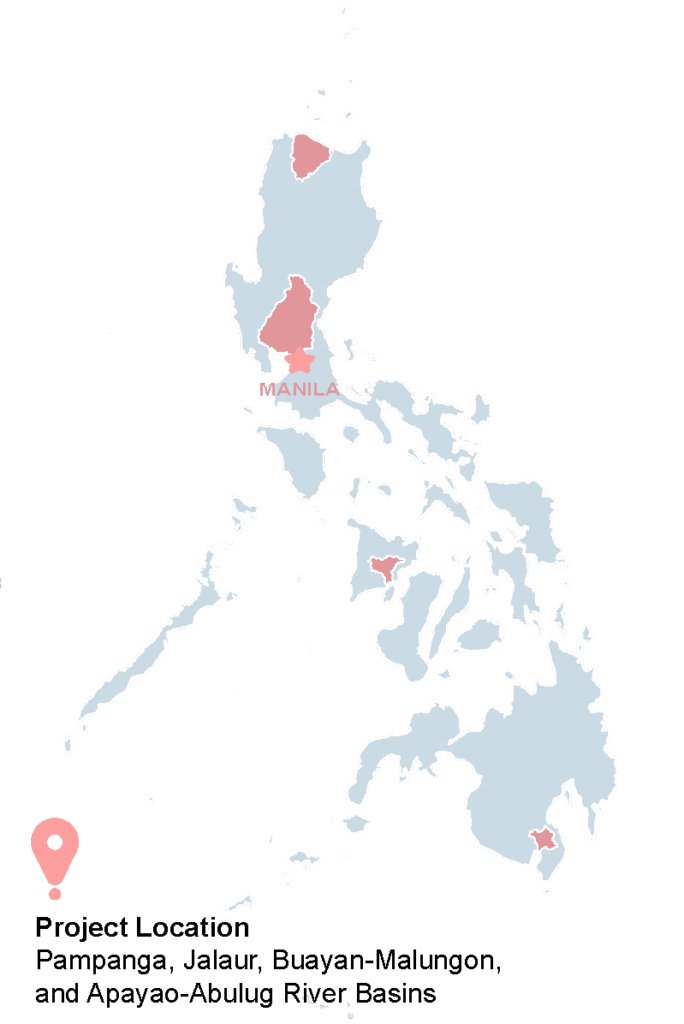
The Philippines is highly exposed to floods and sedimentation risks, with four major river basins – Pampanga, Jalaur, Buayan-Malungon, and Apayao-Abulug – among the most flood-prone in the country. The Government of the Philippines, with ADB support, is preparing the Enhanced Integrated Flood Resilience and Adaptation Investment Program, a multi-tranche financing facility (MFF) spanning approximately ten years. While the Program’s primary interventions centre on large-scale grey infrastructure, it also integrates nature-based solutions and non-structural measures such as early warning systems to address the upstream drivers of flood risk and sedimentation, including stabilising critical slopes, reducing erosion, enhancing water retention, and supporting livelihoods.
The watershed management component, to be implemented by the Department of Environment and Natural Resources (DENR), is a critical part of this broader program. With an indicative financing envelope of USD 500 million, it is expected to deliver scaled-up forest and landscape restoration, diversified rural livelihoods, improved watershed governance, and mobilised sustainable financing mechanisms across the four priority basins. ICEM has been engaged by ADB to prepare the strategic framework and pre-feasibility investment package for the watershed component, with a particular focus on making the case for nature-based solutions and green-grey integration as a cost-efficient approach to flood risk management.
Objectives
The assignment aims to:
- Develop a strategic prioritisation framework for the watershed management component of the MFF across four priority river basins, identifying hotspots and establishing the evidence base for nature-based solutions as a cost-efficient complement to grey flood infrastructure.
- Prepare a pre-feasibility investment package for the first MFF tranche, providing the analytical foundation for ADB and Government appraisal and defining the sequencing logic for subsequent tranches.