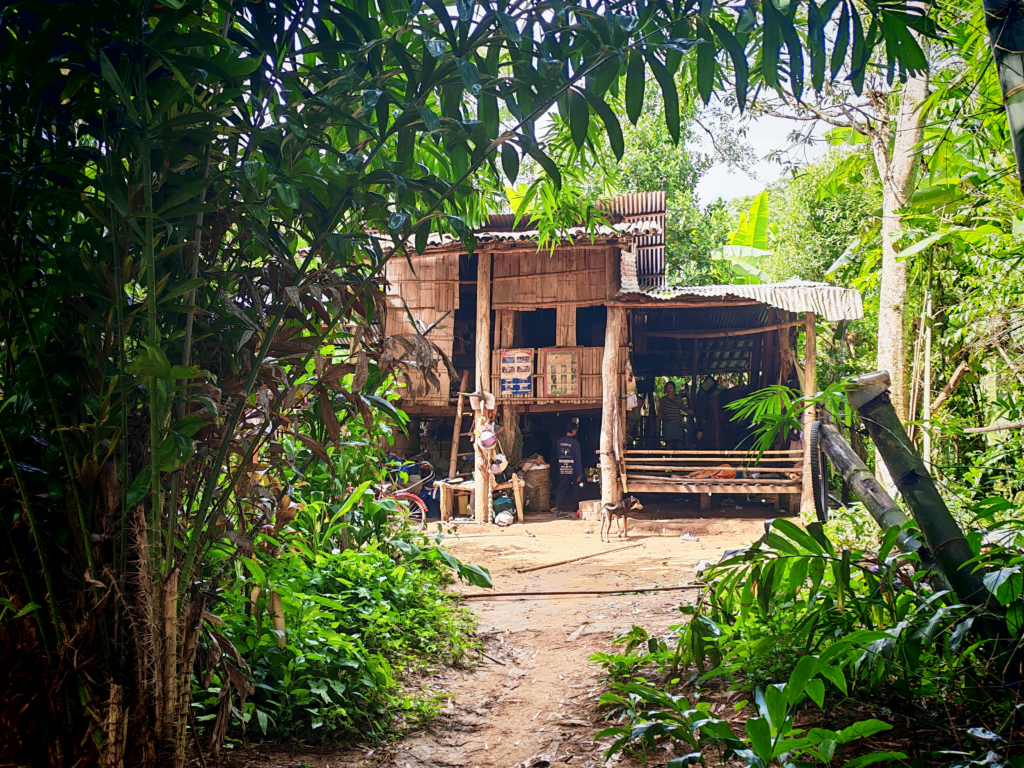
The Huai Sat Lek River (Small Animal River) is the lifeblood of Pa Deng Tai, a Karen ethnic minority village nestled among the forested mountains bordering Thailand’s Kaeng Krachan National Park, a UNESCO World Heritage Site. Crossing the river is part of everyday life for villagers as they tend their farms, exchange goods and care for their families.
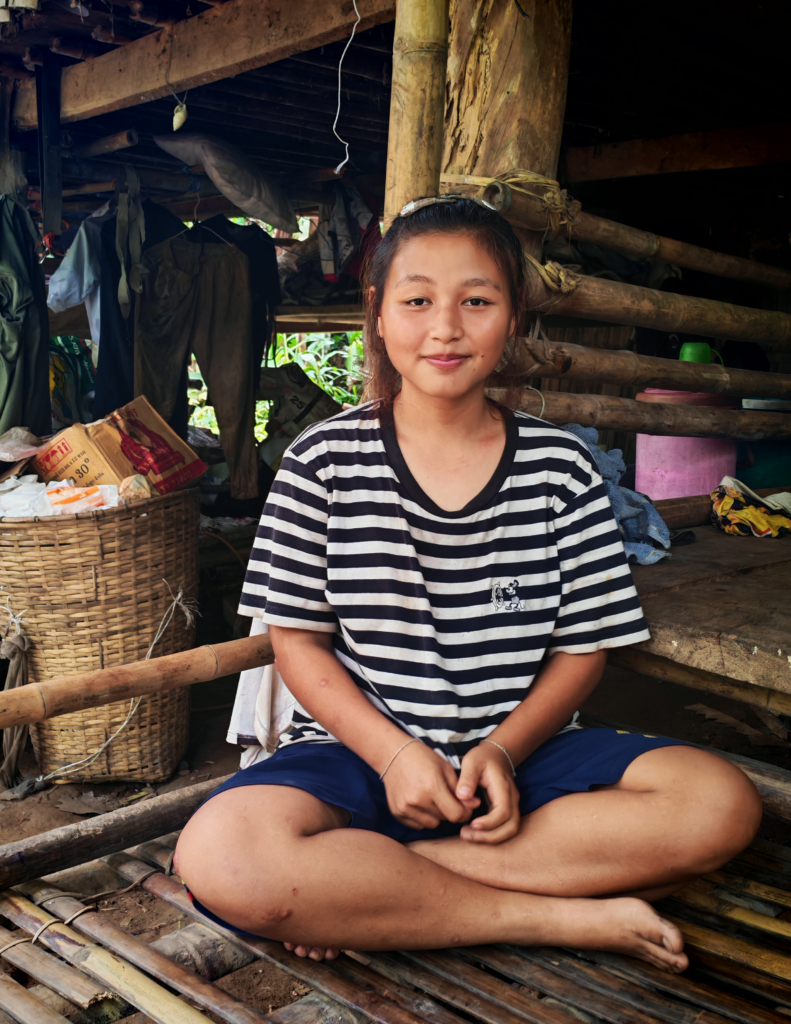
In this remote community, 18-year-old Kulu faces daily challenges balancing family responsibilities with her aspirations for a more secure future. Living with her ailing mother and 13-month-old son, she spends most of her time providing care for her mother, who is bedridden and requires around-the-clock assistance.
“I take care of my mother as her main caregiver,” Kulu explains. “She can still hear and speak, and she often asks for her favourite foods and drinks, such as orange juice.”
Her husband works six days a week as a daily wage labourer on neighbouring farms, earning approximately the minimum daily wage in Thailand. Despite his efforts, the family’s income is insufficient to cover monthly expenses. Kulu relies on external assistance for essential food supplies, while the household obtains drinking water from the river and depends on solar panels for electricity.
Creating livelihood opportunities for women
Kulu’s caregiving responsibilities significantly limit her opportunities to earn additional income or participate in community activities. She occasionally attends Kaeng Krachan National Park meetings organised by the Department of National Parks, Wildlife and Plant Conservation to learn about forest and land regulations and management, when her stepfather is available to care for her mother.
One opportunity she hopes to pursue is handicraft production.
“I would like to learn how to make souvenirs for park visitors,” she says. “But I cannot attend the training sessions. If someone could come and teach me, that would be welcome.” She is confident she can make quality crafts if provided with material and the tools to sew them.
Through the Mekong Protected Areas and Development Program (PAD III), opportunities could be explored to connect Kulu with local women artisans and provide flexible, home-based training in producing souvenirs, bamboo products and other locally approved crafts. Linking these products to the village ecotourism initiative could create an additional income source while promoting local skills and cultural identity.
Home gardening offers another practical opportunity. PAD III plans to support a community nursery and garden in Pa Deng Tai. A home gardening starter kit, including seedlings, compost, pots and basic tools, could enable Kulu to grow vegetables and herbs for household consumption and sell surplus produce to the village women’s group that prepares meals for national park visitors.
To sustain these activities, support could include practical training, mentoring, access to materials and connections with local tourism markets. Flexible training arrangements would be particularly important to accommodate Kulu’s caregiving responsibilities.
Inclusive livelihoods for stronger conservation outcomes
Kulu’s experience highlights the importance of recognising the social and economic circumstances of women living alongside protected areas. Unpaid caregiving responsibilities and limited access to training can restrict women’s participation in local economic opportunities, despite their important roles in community development.
Supporting locally appropriate livelihood activities can strengthen household resilience, improve women’s economic participation and create stronger connections between communities and sustainable tourism. These efforts also contribute to the broader objectives of inclusive and participatory protected area management.
“My mother raised me by herself, so I am happy to take care of her,” Kulu says. “However, I do need extra income, and I would like to work outside the house to earn it.”
With appropriate skills, resources and market connections, Kulu could gradually develop a home-based livelihood that complements her family responsibilities. For her, this means greater financial security and a better future for her family. For Pa Deng Tai, it demonstrates how inclusive livelihood development can support community well-being while contributing to the long-term sustainability of conservation efforts.
The Mekong PAD III Program is funded by the Australian Government through the Mekong-Australia Partnership and implemented by ICEM as the lead organisation, in partnership with IUCN, Landcare Australia, and the University of Tasmania.